Define the cleaning use case precisely
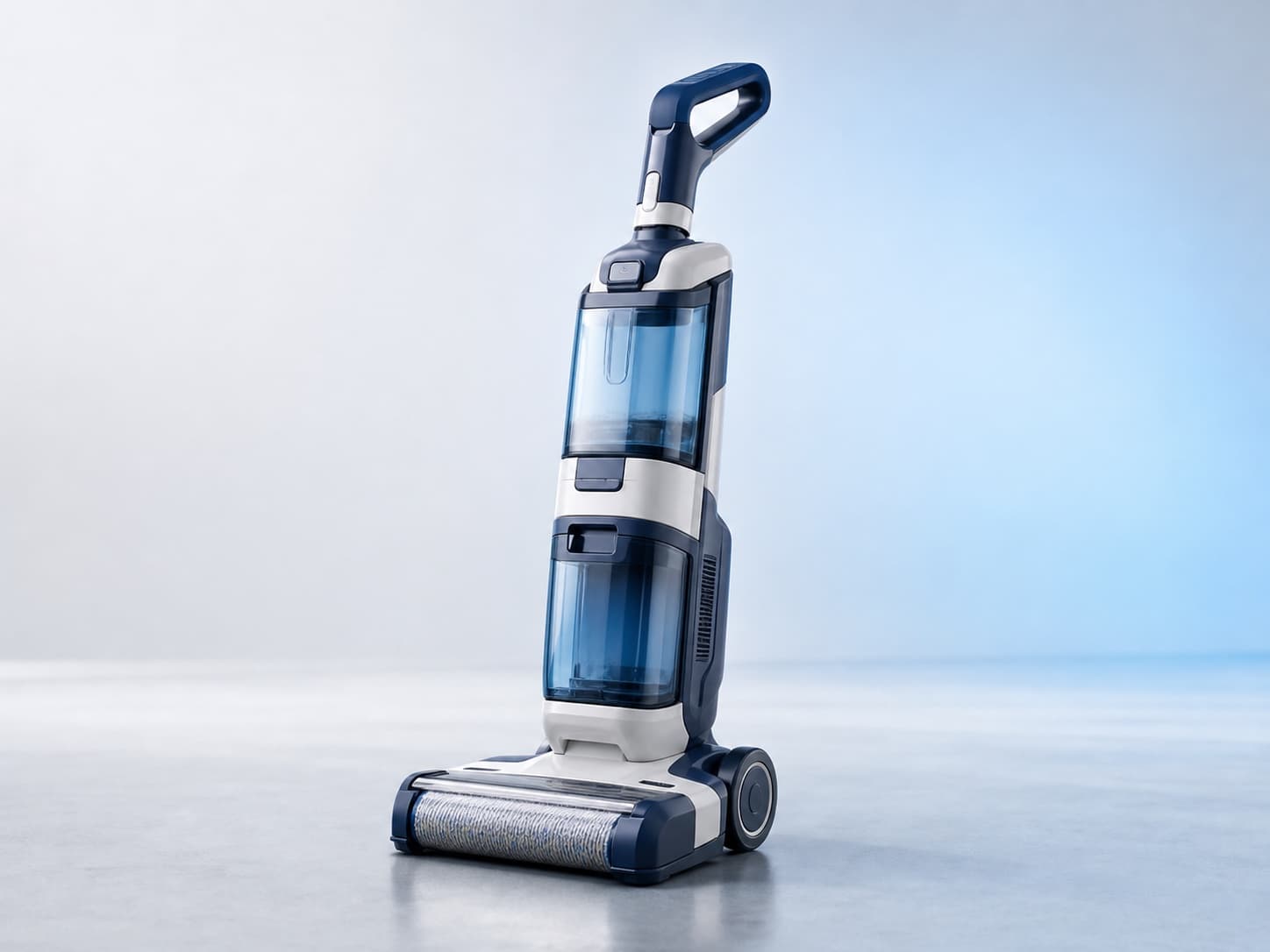
‘Wet and dry’ can describe very different jobs, from collecting a small kitchen spill while cleaning hard floors to handling heavier debris in a utility area. Specify the intended floor materials, typical soil, spill volume, room size, edge conditions, and whether the user expects washing and debris pickup in one pass. Also list excluded uses so product claims, instructions, and demonstrations do not imply an application the configuration was not designed to handle.
Translate these scenarios into repeatable sample tasks. Use representative dry debris, sticky soil, hair, and liquid rather than evaluating only with clean water on a smooth surface. The target is not a universal product; it is a controlled performance balance that suits the buyer's channel, user expectations, and maintenance tolerance.
Review the complete water-handling path
Trace clean water from filling to delivery and dirty water from the floor to emptying. Review tank removal, fill openings, seals, valves, ducts, level detection, separation of clean and dirty paths, and protection of electrical areas. Tilt, turning, threshold crossing, carrying, and storage can expose leakage or backflow risks that a straight-line demonstration will miss.
Ask what happens when a tank is missing, full, incorrectly seated, or fitted with a damaged seal. User feedback should be clear enough to prevent continued operation in an abnormal condition. Cleaning-agent compatibility, if part of the intended use, must be treated as a configuration-specific material and instruction decision rather than assumed from water-only testing.
Balance brush action, liquid delivery, and recovery
The brush, squeegee or scraper geometry, liquid distribution, suction path, and forward speed work together. More liquid is not automatically better: excess delivery can leave floors wetter, increase tank demand, and complicate edge behavior. Evaluate pickup and residual moisture across the intended floors, including along walls, around furniture legs, during turns, and after the user pauses.
Hair and fibrous debris deserve a separate review because they can wrap around a roller, accumulate in narrow passages, or interfere with seals. Confirm how the roller and cover are removed, which surfaces the user can reach, and whether reassembly provides clear orientation and positive engagement. A design that cleans well only when freshly prepared may perform poorly in real ownership.
Design the maintenance workflow as part of the product
After-use care shapes reviews and return rates. Run the full sequence: remove the dirty-water tank, empty it without splashing, rinse accessible parts, clear the brush area, use any self-cleaning function, dry the relevant components, and store the machine. Count touchpoints and note where dirty water, hair, or odor-producing residue can remain.
Instructions and product cues must agree on which parts are washable, how long drying should occur before reassembly, and what routine inspection is expected. If a dock or tray is included, inspect drainage, stability, cable routing, and the area it occupies in a typical home. Consumables and replaceable wear parts should be identified before packaging and after-sales plans are finalized.
Build validation around normal and foreseeable misuse
A useful validation plan combines cleaning outcomes with durability, leakage, controls, charging, thermal behavior, materials, packaging, and user-interface checks appropriate to the chosen configuration. Include repeated tank installation, brush removal, cap opening, hose or duct exposure where relevant, and storage cycles. Test samples representing production-intent materials and assembly, not only early demonstration units.
Define the sample version, test method, preconditioning, pass criteria, and owner for every check. Record deviations and retest after design changes. Regulatory and retailer requirements differ by target market and product architecture, so applicable standards and evidence should be confirmed for the specific model with qualified specialists before launch.
Wet and dry vacuum buyer checklist
Use the same checklist for supplier comparison and sample acceptance. Attach photos or videos to observations when they make leakage, residue, handling, or cleaning outcomes easier to review across teams.
- Define included and excluded floors, soil types, spills, debris, and room scenarios.
- Trace filling, delivery, recovery, tank removal, emptying, and abnormal conditions.
- Evaluate brush access, hair handling, edge cleaning, turns, and residual moisture.
- Run the complete after-use cleaning, drying, storage, and consumables workflow.
- Agree sample versions, test methods, pass criteria, change control, and retesting.
- Confirm model-specific market, safety, labeling, documentation, and evidence needs.